The Interno SG guide

L’Aquila and its surroundings, at your own pace

Local stories, places to visit and practical information to plan your own itinerary independently.

Exploring the city on foot

What to see in L’Aquila: history and culture

Basilica di Santa Maria di Collemaggio L’Aquila

Collemaggio, its park and the Celestinian Forgiveness

View on map: Collemaggio, its park and the Celestinian Forgiveness

Santa Maria di Collemaggio tells the story of L’Aquila’s connection with Pietro da Morrone, Pope Celestine V. Its white-and-pink facade and the lawn in front invite an unhurried visit followed by a walk in the green surroundings.

In 1294 Celestine V granted an indulgence, subject to its religious conditions, between the evenings of 28 and 29 August. The Celestinian Forgiveness continues this tradition of reconciliation and civic participation and has been on UNESCO’s intangible cultural heritage list since 2019.

Plan your visit Combine the basilica with the park and the nearby historic centre. Check with the organisers for celebrations, access and the festival programme.

Read more on UNESCO
The 99 Spouts: water, history and legend

View on map: The 99 Spouts: water, history and legend

In the Rivera district, the Fountain of the 99 Spouts is a symbol of L’Aquila’s civic identity. Its earliest part dates to 1272 and is associated with Tancredi da Pentima. Stone basins and carved faces reflect the city’s relationship with water in an area rich in springs.

Tradition connects the number 99 with the castles said to have helped found the city. The tale that counting the spouts never gives the same total is folklore, not a historical fact: the fountain has changed over time. Stories about its secret water source also belong to local legend.

Plan your visit Walk to Borgo Rivera to examine the carved faces. Do not assume the water is drinkable: follow signs at the site.

Read more on FAI

The Spanish Fort and the Mammoth

View on map: The Spanish Fort and the Mammoth

The Spanish Fort is the sixteenth-century castle in the park north of the centre. Built between 1534 and 1567 to a design by Pedro Luis Escrivá for Charles V, it tells the story of Spanish rule and military architecture in the Kingdom of Naples.

The east bastion houses the famous Mammoth, the fossil skeleton of Mammuthus meridionalis discovered near Scoppito in 1954. This remarkable local fossil offers a glimpse of a landscape very different from today’s.

Plan your visit A park walk and a Mammoth visit are separate experiences. Check the MuNDA website for accessible rooms and admission arrangements.

Read more on MuNDA

Museums, palaces and historic streets

View on map: Museums, palaces and historic streets

From Piazza Duomo, follow Corso Vittorio Emanuele towards Piazza Palazzo and the Fontana Luminosa. Take a detour to San Bernardino for its Renaissance facade and staircase. Look for historic doorways and courtyards along the lanes while respecting private property.

For an art day, explore the National Museum of Abruzzo or MAXXI L’Aquila in Palazzo Ardinghelli, where historic architecture meets contemporary art. Accessible museum sites and exhibitions can change: check official information before visiting.

Plan your visit On a rainy day, spend longer in museums; in good weather, combine an exhibition with a walk between squares and basilicas.

Read more on MAXXI L’Aquila

A day beyond the city

Places to visit near L’Aquila

Campo Imperatore

Gran Sasso and Campo Imperatore

View on map: Gran Sasso and Campo Imperatore

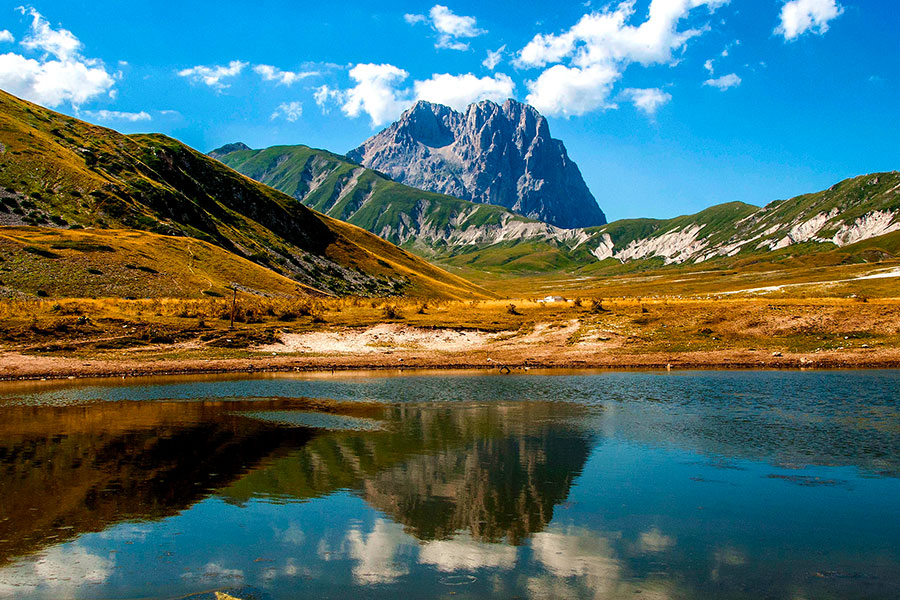
Outside the city, Campo Imperatore opens into a broad plateau among Gran Sasso’s pastures and peaks, shaped by Abruzzo’s pastoral culture. A day trip can focus on scenery and short stops rather than a demanding hike.

Choose mountain routes according to your experience, equipment and conditions. High-altitude trails are not city walks, and a trip to the plateau is not the same as climbing a summit.

Plan your visit Check weather, road access and Park notices. Roads may close in winter and transitional seasons: do not rely on navigation alone.

Read more on Parco Gran Sasso e Monti della Laga

A stop at Ristoro Mucciante

View on map: A stop at Ristoro Mucciante

On the Campo Imperatore plateau, Ristoro Mucciante is a food stop associated with pastoral traditions, arrosticini and local produce. Include it in a Gran Sasso outing according to your route and the season.

Do not assume opening, availability or services: check the venue’s information before setting off and follow local parking and outdoor-area instructions.

Plan your visit Combine the stop with Campo Imperatore rather than fitting too many villages and long drives into the same day.

Read more on Ristoro Mucciante

Santo Stefano di Sessanio

View on map: Santo Stefano di Sessanio

Explore this stone village on foot through narrow passages, steps and intimate views. Santo Stefano di Sessanio retains its medieval layout and is a rewarding introduction to the villages on the L’Aquila side of Gran Sasso.

Allow time for lanes, local workshops and the surrounding landscape. Wear comfortable shoes for uneven ground and steps, and check any access restrictions.

Plan your visit Combine it with Calascio while leaving enough time for the drive and the walk towards the fortress.

Read more on Parco Gran Sasso e Monti della Laga
Rocca Calascio

Rocca Calascio: fortress and landscape

View on map: Rocca Calascio: fortress and landscape

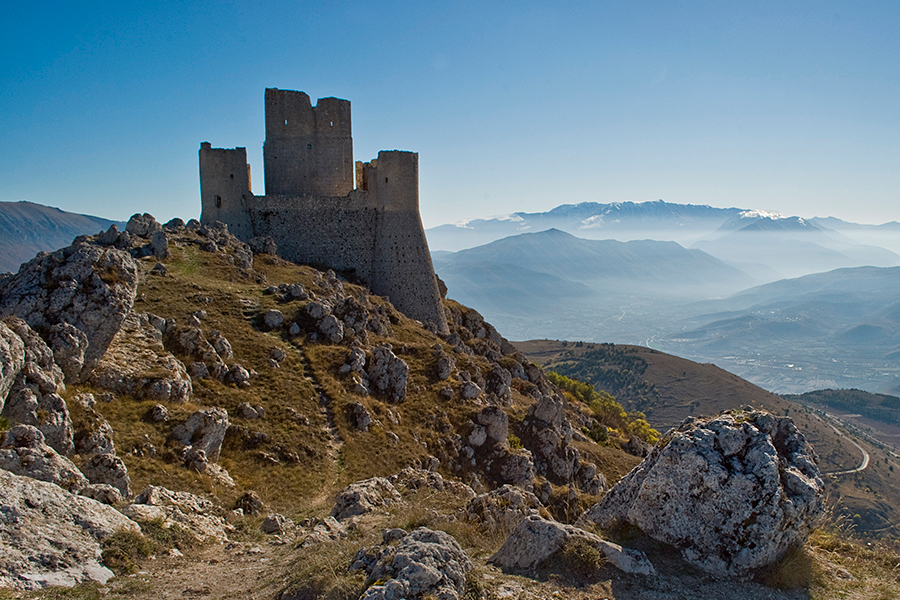
The fortress overlooks the landscape and is one of Abruzzo’s most recognisable sights. Its fortifications, village and nearby church of Santa Maria della Pietà bring together architecture and scenery.

Wear suitable shoes for the final uphill walk and take care with wind and uneven ground. Road access and any shuttle service should be checked, especially during busy periods.

Plan your visit Check municipal and local visitor information before setting off. Avoid planning a return on trails after dark.

Read more on Rocca Calascio

Capodacqua and its submerged mills

View on map: Capodacqua and its submerged mills

Near Capestrano in the Tirino valley, Capodacqua is a small artificial lake fed by springs. Clear water and submerged mill remains have earned it the nickname “Abruzzo’s little Atlantis”.

This is a protected environment, not an unrestricted swimming beach. Arrange any water-based or diving experiences with authorised operators and check rules, availability and requirements.

Plan your visit Combine the area with Capestrano or Navelli, without assuming unrestricted shore or underwater access.

Read more on I laghi del Parco

Navelli and L’Aquila saffron

View on map: Navelli and L’Aquila saffron

Navelli is associated with L’Aquila’s red gold: saffron. Stone houses and uphill lanes define the village, while the plateau tells the story of a living agricultural tradition.

Autumn flowering and harvesting are especially fascinating. Look for producer-led activities to learn about processing, checking the calendar first: fields are not open-access visitor areas.

Plan your visit Combine a village walk with a saffron purchase, checking its origin and the producer’s information.

Read more on Italia.it

Lake Campotosto: water and mountains

View on map: Lake Campotosto: water and mountains

Between Gran Sasso and the Monti della Laga, Campotosto is Abruzzo’s largest artificial lake. Created for hydroelectric production, it now offers open views of water, meadows and mountains within a nature reserve.

Focus a day trip on viewpoints and short walks in permitted areas. Do not assume the whole lakeside has traffic-free paths: choose safe stopping places and follow signs.

Plan your visit Check roads and weather, especially in snow or ice. Never venture onto frozen water and respect restrictions along the banks.

Read more on Italia.it